
Prime Minister Narendra Modi has highlighted the risks posed by the 'weaponisation' of resources and strategic sea routes, urging India to achieve greater self-reliance in energy to mitigate vulnerabilities to overseas supplies and geopolitical tensions.

In a bid to de-escalate Middle East tensions, the US has presented Iran with a comprehensive 15-point peace plan focusing on nuclear disarmament and regional stability in exchange for sanctions relief.

'As result, Netanyahu 'convinced' Trump to go to war with the help of overoptimistic Israeli intelligence assessments, essentially explaining to him that they only need to bomb Iran for 3-4 days, and the regime would then collapse.' 'Rather unsurprisingly, Netanyahu is ever since blaming his own intel service for the entire operation failing.'

Russian President Vladimir Putin is set to visit China for talks with Chinese leader Xi Jinping, shortly after US President Donald Trump's visit to Beijing. The visit underscores the close strategic ties between China and Russia amid global tensions.
Asked about the expectations from the US, Azar said Washington and Israel are "completely in sync". He said he felt that the US would "support" Israel's action.

From Dr A P J Abdul Kalam to Sourav Ganguly, these coming biopics are bringing some of India's most fascinating lives to the big screen.

A new report from the Stockholm International Peace Research Institute (SIPRI) indicates that India has expanded its nuclear arsenal and is developing long-range weapons capable of reaching targets across China, while also maintaining focus on its rivalry with Pakistan.

US President Donald Trump has dismissed media reports suggesting that diplomatic negotiations between Washington and Tehran have stalled, maintaining that dialogue persists despite intensifying geopolitical friction across the Middle East.
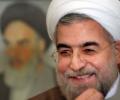
In a major diplomatic breakthrough, the foreign ministers of United States and Iran will hold talks on Tehran's controversial nuclear drive at a landmark meeting on Thursday -- the first between the two states in more than 30 years.

US President Donald Trump in an exclusive interview to Axios on Wednesday, said that he would continue to keep the naval blockade until Iran agrees to deal with the United States by addressing America's concerns about the nuclear programme.
In a significant diplomatic development, US and Iranian negotiators have reportedly reached a tentative 60-day memorandum of understanding (MoU) aimed at extending a fragile ceasefire and paving the way for formal talks regarding Iran's nuclear programme.

Experts' worries intensified after Pakistan commissioned its first Chinese-built Hangor-class submarine, PNS Hangor, last month.

Uncertainty surrounds the US-Iran talks as a two-week ceasefire approaches its end. Pakistan is attempting to mediate, but tensions remain high after a recent naval incident.

A Pakistani delegation, led by Army Chief Field Marshal Asim Munir, has arrived in Tehran to mediate the ongoing conflict between the US and Iran, following initial talks in Islamabad.

A peace deal between the US and Iran, set to be signed in Geneva, faces significant hurdles over the release of Iran's USD 12 billion in frozen assets, with conflicting reports from both sides on the conditions for their release.

The country is planning to increase its nuclear power generation by about 60,000 mega watts (Mw) within the next 25 years. This planned capacity addition is being executed by the state-owned Nuclear Power Corporation of India Ltd (NPCIL). Its head, Chairman and Managing Director SK Jain, tells P B Jayakumar about his plans and expectations.

Adani Group Chairman Gautam Adani announced a capital expenditure programme of over 2 trillion for Adani Power, aiming for 45 gigawatts (Gw) capacity in five years, including a significant entry into nuclear power with a target of 10 Gw by 2035 through Adani Atomic Energy.

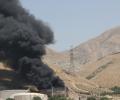
Donald Trump shared a video on Truth Social purportedly showing explosions in Isfahan, Iran, following reports of attacks in Tehran. The authenticity of the video is unverified, but reports suggest a joint US-Israeli strike on an ammunition depot.

A sensational New York Times report alleging that Israel's Mossad secretly groomed former Iranian president Mahmoud Ahmadinejad to lead a post-Islamic Republic Iran is being scrutinised for its strategic timing amidst Iran's sensitive post-Khamenei transition.
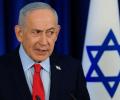
Benjamin Netanyahu declares that the joint Israel-US campaign is successfully 'crushing' Iran, eliminating existential threats and weakening the regime's regional influence.

Direct talks between the US and Iran, mediated by Pakistan, have failed to produce an agreement after 21 hours of negotiations, with disagreements over Iran's nuclear ambitions and sanctions proving insurmountable.

The embassy also said that the exit must be undertaken in coordination with the mission.

Iran has presented a multi-layered proposal to the US in an attempt to break the deadlock in peace talks, focusing on de-escalation and nuclear programme discussions.

'Pakistan's is the only military-controlled nuclear weapons programme in the world.' 'As people get radicalised, the risk of a brigadier or pilot taking matters into their own hands is a real concern.'

Construction major L&T is gearing up to expand its footprint in the global nuclear supply chain, a senior company official has said, while calling for amendments to key legislations on the domestic front to pave the way for the entry of private players and foreign capital necessary for capacity enhancement.

While nuclear engineers cheer KNPP's first full operation, on nine other sites which house atomic reactors, scientists spend sleepless nights.

'The BJP has all the instruments with them and they do have a sense of purpose, so I don't think there will be a challenge.'

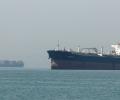
Tensions escalate as Iranian forces attack a container ship in the Strait of Hormuz after Trump announced the ceasefire extension.

Donald Trump has expressed confidence that Tehran will engage in diplomatic talks, warning that the country will 'see problems' should it refuse to cooperate.

Tensions escalate between Iran and the US over control of the Strait of Hormuz, a crucial shipping lane for global oil supplies, as both sides discuss extending a fragile ceasefire.

Israeli Prime Minister Benjamin Netanyahu has warned that recent missile attacks demonstrate Iran's capacity to strike globally, posing a threat to Europe and the rest of the world. He highlighted the need for international action to counter Iran's nuclear and missile programmes.

The United States Central Command (CENTCOM) has announced that American forces are maintaining a strict maritime restrictive operation in the region, continuing to enforce a blockade against Iranian ports.

Trump further alleged that Iran was behind the attacks on three vessels carrying Indian seafarers near the Hormuz Strait, which resulted in the deaths of three, despite the US Central Command having confirmed that the strikes were carried out by American naval forces, calling the incident "totally unacceptable."
Expressing concern over the continuing buildup of nuclear weapons in South Asia, the United States has asked India and Pakistan to restrain their atomic and missile programmes and play a positive role in the global non-proliferation community.

US Vice President JD Vance's visit to Islamabad for peace talks with Iran has been put on hold after Tehran failed to respond to American negotiating positions, according to a New York Times report.

Addressing members of the Islamic Revolutionary Guard Corps, armed forces, and police, Trump said they must lay down their weapons and accept complete immunity or face 'certain death'.
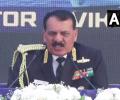
India is strengthening the naval component of its nuclear triad with Navy Chief Admiral Dinesh K Tripathi on Tuesday saying that the third indigenous nuclear-powered submarine 'Aridaman' will be commissioned soon and that his force is focusing on boosting its overall combat prowess.

Chinese Foreign Minister Wang Yi has urged Iran to guarantee freedom and safe passage through the Strait of Hormuz, a critical waterway for global oil trade, amid ongoing tensions with the US.

A recently finalised peace deal between the US and Iran, set to be signed on June 19, is expected to significantly benefit India's economy by boosting exports to West Asia, stabilising the rupee, and easing inflationary pressures, according to exporters and experts.

Israeli Prime Minister Benjamin Netanyahu has asserted that Iran is no longer capable of enriching uranium or producing ballistic missiles, following a joint military campaign with the US.
